Invisalign vs. Braces: What Are They?
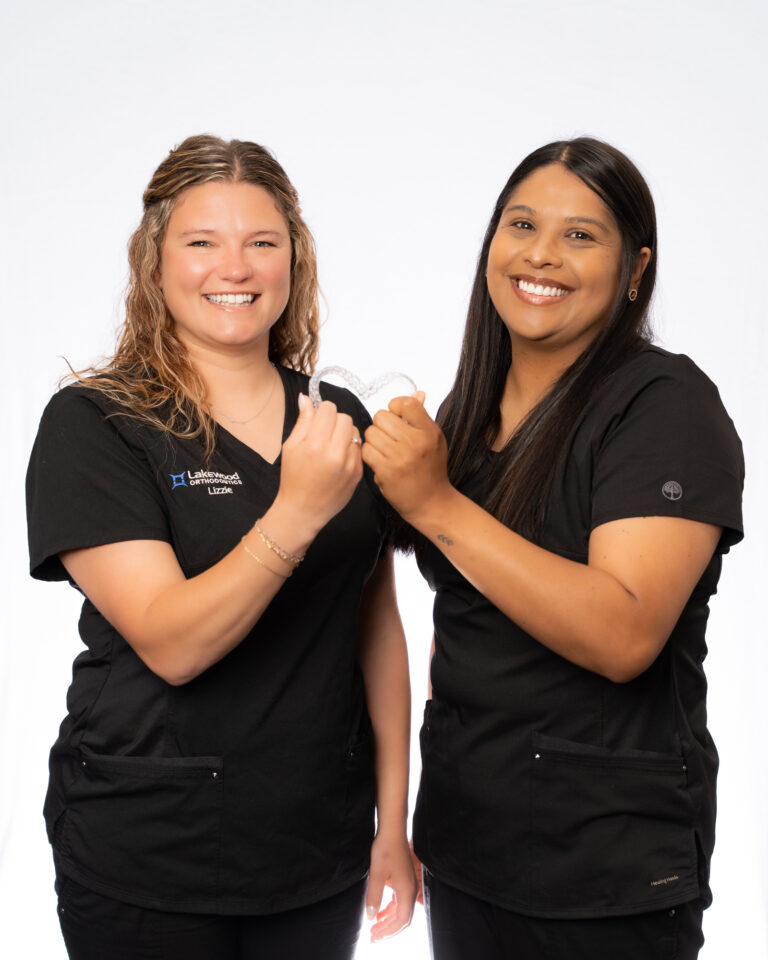
The main difference is simple. Invisalign uses clear, removable plastic trays that gradually shift teeth into place. Braces use small brackets bonded to your teeth, connected by a wire that guides movement. Both straighten teeth and correct bite issues with great results, but each works in a very different way. If you want a deeper look at how aligners move teeth, our guide on how Invisalign works breaks it down.
At Lakewood Orthodontics, Dr. Ravi Rajanna, DDS, helps families weigh the pros and cons of each option during a free consult.
Beyond these two classic choices, you have a few more ways to straighten your smile:
- Clear aligners (like Invisalign): nearly invisible, removable trays
- Modern metal braces: durable brackets and wires, often with fun color options
- Clear braces: tooth-colored brackets that blend into your smile
- Lingual braces: brackets placed behind your teeth for a fully hidden look
Each option works toward the same goal: a healthy bite and a smile that lasts. The right fit depends on your case, your lifestyle, and your preferences. That’s where Dr. Ravi and the Lakewood team come in. We walk you through every option, answer your questions, and help you feel confident before you decide.
How Do Invisalign and Braces Work?
Both treatments use steady, gentle pressure to guide teeth into the right position over time. The difference is how that pressure gets applied. Invisalign uses a custom set of clear aligners you swap out every one to two weeks. Braces use brackets and wires adjusted during regular visits to your Lakewood Orthodontics office.
Here’s a quick look at how each one moves your teeth:
- Dr. Ravi takes digital scans of your teeth, with no messy impressions.
- A custom set of trays is designed to map out your full smile.
- You wear each tray about 20-22 hours a day.
- Every one to two weeks, you switch to the next tray in the series.
- You’ll visit us every 6-8 weeks for quick check-ins.
Modern metal braces and clear braces:
- Brackets are bonded to the front of each tooth.
- An archwire connects the brackets and applies gentle pressure.
- You visit every 4-8 weeks for adjustments.
- Wires and elastics are changed as your teeth shift.
- Brackets stay on 24/7, so progress never pauses.
Most cases finish in about 12-24 months, depending on complexity. Dr. Ravi maps out your smile journey from the start, so you’ll know what to expect at each step.
Key Benefits of Each Treatment
Each option has real advantages. The best fit depends on your goals, your daily routine, and how complex your case is. Here’s a look at where each one shines.
Why families love Invisalign:
- Nearly invisible: Clear trays are tough to spot, even up close.
- Removable: Take them out to eat, brush, and floss like normal.
- No food restrictions: Aligners come out at mealtime, so you don’t have to skip your favorites.
- Fewer office visits: Check-ins are quick and often spaced further apart.
- Comfortable: No metal parts to poke or rub your cheeks and gums.
- Easy oral hygiene: Brush and floss as you always have.
Why braces still win for many smiles:
- Great for complex cases: Severe crowding, rotations, and bite issues are well-suited for braces.
- Always working: Since brackets stay on 24/7, there’s no risk of forgetting to wear them.
- No compliance worries: Good for kids, teens, or anyone who’d rather not track wear time.
- Strong, reliable results: Decades of proven outcomes.
- Customizable: Pick fun colors with modern metal braces or go subtle with clear braces.
Clear braces give you a middle-ground option. You get the strength of fixed brackets with a more discreet look. Lingual braces, placed behind your teeth, hide treatment altogether. Dr. Ravi will talk through what fits your smile goals best.
Invisalign vs. Braces: Side-by-Side Comparison
Picking between Invisalign and braces feels easier when you can see the differences laid out. Here’s a feature-by-feature look at how the two stack up.
| Feature | Invisalign (Clear Aligners) | Modern Metal & Clear Braces |
|---|---|---|
| Appearance | Nearly invisible | Visible, though clear braces blend in more |
| Comfort | Smooth plastic, no wires | May cause some soreness after adjustments |
| Removable? | Yes, for eating and cleaning | No, fixed to teeth |
| Food restrictions | None, just remove to eat | Avoid sticky, hard, and crunchy foods |
| Oral hygiene | Easy, brush and floss as usual | Requires extra care around brackets |
| Office visits | Every 6-8 weeks | Every 4-8 weeks |
| Best for | Mild to moderate cases | Mild to complex cases |
| Compliance needed | Yes, must wear 20-22 hours/day | None, always working |
| Treatment time | Typically 12-24 months | Typically 12-24 months |
| Sports & activities | Pop them out for mouthguards | Wear a mouthguard over brackets |
Clear aligners reach their best results when worn the recommended 20-22 hours a day, since the gentle pressure only works while the trays are in place. Braces apply that pressure around the clock because they never come off.
A few things to keep in mind:
- Lifestyle matters. If you love being able to take a break, clear aligners give you flexibility. If you’d rather “set it and forget it,” braces win.
- Self-discipline counts. Aligners only work when you wear them. Braces don’t ask anything of you besides good oral hygiene.
- Complex bites favor braces. Big rotations, deep bites, and severe crowding often respond best to fixed brackets.
Dr. Ravi and the team will help you weigh what fits your day-to-day life. We believe in honest care, real relationships, and results that last, and that’s the kind of guidance you’ll get when comparing your options.
What Affects the Cost of Invisalign and Braces?
Several factors shape your final cost, and Invisalign and braces often fall in a similar range. The biggest drivers are case complexity, how long treatment lasts, the type of appliance you choose, and your insurance coverage. Mild crowding costs less than full-bite correction, and shorter plans usually run less than longer ones.
Main factors that influence cost:
- Case complexity: Mild crowding costs less than full-bite correction.
- Treatment length: Shorter plans usually cost less than longer ones.
- Type of appliance: Modern metal braces, clear braces, lingual braces, and clear aligners each have different price points.
- Insurance coverage: Many dental plans cover part of orthodontic care, especially for kids and teens.
- Flexible financing: Monthly options can spread out the cost so it fits your budget.
At Lakewood Orthodontics, we make it easy to get started with flexible financing, insurance support, and no-pressure consults. You’ll get a clear, written estimate at your free consult, so you can plan ahead with confidence.
Costs vary by individual, so the only way to know your exact investment is to sit down with Dr. Ravi. We’ll talk through your goals, walk you through every option, and help you find a plan that works for your family.
Which Treatment Is Right for You?
The right choice depends on your bite, your age, your lifestyle, and how much daily commitment you’re up for. Here’s a quick guide to help you think it through.
Invisalign might be a great fit if you:
- Have mild to moderate spacing, crowding, or bite concerns
- Want a discreet option for work, school, or social settings
- Can commit to wearing trays 20-22 hours a day
- Want flexibility to remove your aligners for meals and special events
- Are an adult or responsible teen ready to follow the plan
Braces might be the better choice if you:
- Have complex bite issues, severe crowding, or significant rotations
- Are a younger child or teen who’d rather not manage trays
- Want a “set it and forget it” approach with no compliance worries
- Like the idea of fun color options with modern metal braces
- Prefer clear braces for a more subtle fixed-bracket look
Age plays a role, too. Teens and adults often gravitate toward clear aligners or clear braces. Younger kids in early treatment usually do best with modern metal braces. The American Association of Orthodontists recommends an initial orthodontic evaluation around age seven, so there’s no wrong time to start the conversation.
The best way to know for sure? A free consult with Dr. Ravi Rajanna. He’ll evaluate your smile, talk through your goals, and help you decide on your terms.
Frequently Asked Questions
Is Invisalign as effective as braces?
For mild to moderate cases, yes. Invisalign produces great results when worn 20-22 hours a day. For severe crowding, complex bites, or significant tooth rotations, braces often work better because they stay on 24/7 and apply constant pressure. Dr. Ravi can tell you which option will give you the best result during your free consult.
Which is faster, Invisalign or braces?
Both typically take about 12-24 months, depending on the complexity of your case. Some mild Invisalign cases finish faster, while more involved smiles may take longer with either option. Speed depends more on your specific bite than on the appliance you choose.
Does Invisalign hurt less than braces?
Most families say clear aligners feel more comfortable day-to-day. There are no brackets to rub your cheeks and no wires to poke. You may feel some pressure when you switch to a new tray, which is a sign the aligners are working. Braces can cause some soreness right after adjustments, but it usually settles within a day or two.
Can I switch from braces to Invisalign?
In many cases, yes. If your circumstances or preferences change mid-treatment, Dr. Ravi may be able to transition you from braces to clear aligners. The right time to switch depends on your progress and the type of movement still needed. We’ll talk through it together at your next visit.
Is Invisalign more expensive than braces?
Not usually. Invisalign and braces typically fall in a similar price range, and your final cost depends on case complexity, treatment length, and insurance coverage. We offer flexible financing at Lakewood Orthodontics to make either option affordable.
Still weighing your options? When you’re ready, a free consult with Dr. Ravi Rajanna at Lakewood Orthodontics is a relaxed way to learn what fits your smile best. Our family can’t wait to meet yours.